Showing posts with label Sea World. Show all posts

Friday, April 13, 2012

Blue Horizons - The Complete Dolphins Show at SeaWorld


At the center of “Blue Horizons” is Marina, a young girl whose vivid imagination sets the stage for an extravaganza of graceful dolphins, magnificent pilot whales and a rainbow of exotic birds.  Marina daydreams that one day she can fly in the sky and swim in the ocean.  After encountering Aurora — the spirit of the sky — and Delphis — the spirit of the sea — those dreams begin to come true, as together they explore a place where the sea meets the sky.  “Blue Horizons” features action both above and under the water, as a cast of divers and aerialists, dressed in eye-catching costumes symbolizing sea and sky, plunge off the elaborate set into, and also propel out of, the deep blue water.


To create “Blue Horizons,” SeaWorld collaborated with the entertainment industry’s most inventive and artistic experts, marrying great production value — seen in the larger-than-life set, dramatic costuming and intriguing show development — with the awe-inspiring feats of SeaWorld animals and trainers.

“Only SeaWorld could create such a spectacular concept, a type of show that can be seen nowhere else in the world,” said Stanley Meyer, “Blue Horizons” set designer and show consultant.  “It sets a completely new benchmark for awe-inspiring entertainment.”  Meyer, best known for his work designing the Broadway musical ”Beauty and the Beast,” created the set for SeaWorld Orlando’s “Blue Horizons,” which has been a hit there since 2005.  


Using elements of the sea and sky — and a young girl’s vivid imagination — as his inspiration, Meyer designed a whimsical, yet dramatic, atmosphere with an immense rising sun, hundreds of iridescent bubbles, and an elaborate, 40-foot-high framework which envelopes the pool and balances divers and aerialists as they plunge from bungees and soar on “cloud swings.”

While these characters sway through the sky and dive off the set, the true stars of the show grace the waters below. SeaWorld’s dolphins and pilot whales leap their way into this dreamy adventure.  African crowned cranes, coral bills, black vultures and other bird species soar over the audience as they ascend toward the horizon.  


The stirring, original musical score for “Blue Horizons” is performed by the Seattle Symphony Orchestra.

Dolphin Stadium was completely transformed for “Blue Horizons,” including an entirely new set; trusses, diving boards and bungee swings for the aerialists and divers; a new sound system; high-tech water features; and an additional 700 seats for guests.


‘Blue Horizons’ Show and Construction Fact Sheet

SeaWorld’s Dolphin Stadium has been completely renovated for the park’s new “Blue Horizons,” a spectacular show combining energetic dolphins and pilot whales, with soaring exotic birds and amazing aerialists, divers and bungee performers. “Blue Horizons” opens May 29, 2010 at SeaWorld San Diego.

In order to prepare for “Blue Horizons,” Dolphin Stadium shut down in September 2009 and underwent nine months of construction, beginning in September 2009, including an entirely new set; trusses, diving boards and bungee swings for the aerialists and divers; a new sound system;
high-tech water features; and an additional 738 seats for guests (for a total of 3,552). Initial training for the dolphins and pilot whales began at Shamu Stadium, where the marine mammals lived temporarily during the construction. Training of the birds began in behind-the-scenes areas and eventually at the renovated stadium. 

Dolphin Stadium was originally built in 1971 and has been the venue of many exhibits and shows over the years, including the most recent dolphin show, “Dolphin Discovery,” which, after 13 years, was one of SeaWorld’s longest running shows.


Here’s a look at some of the “nuts and bolts” of “Blue Horizons”:

Cast of animals:
• Up to 16 dolphins
• 2 pilot whales
• 50 rock doves
• 24 Australian corral-billed parrots
• 1 green-winged macaw
• 2 black vultures
• 2 East African crowned cranes

Performing cast:
• Up to 12 animal trainers
• 11 flying performers:
Aurora (the spirit of the sky)
6 high divers
2 aerial performers (perform on
what is known as “Cloud Swings”)
2 bungee performers (known as
“Storm” performers)

Scenic and Trussing Elements:
• 13 fully-automated winches to run
performer and scenery line sets
• 2 moving backdrops and six 60-foot
ascending sun rays
• 6 technicians to run the show
• More than 400 feet of truss
• More than 1,900 feet of rope
• 40 fountain nozzles and 4
articulating fountain devices
• Diving platforms (25 feet above
water)
• 11 automated bird releases

Other facts:
• Length of show: 22 minutes
• Length of time to refill pools after
they were re-painted: 30 hours
• Gallons of saltwater (pumped in from
Mission Bay and filtered) to fill six
pools: 1.4 million
• Performance pool depth: 25 feet
• 5 new Avian enclosures built to
house nearly 100 birds

Production staff:
• Producers: Rick Schuiteman,
SeaWorld Entertainment Director;
Scott Helmstedter and Elizabeth
Hansen, In Motion Entertainment
• Director: Roy Luthringer, In Motion
Entertainment
• Production Designer: Stan Meyer
• Project Manager: Darlene Walter,
SeaWorld Project Engineer
• Entertainment Technical Project
Managers: Nicole Oosterlinck and
Kevin Cook, SeaWorld
Entertainment


SEAWORLD’S GRAND DAME,
BUBBLES THE PILOT WHALE

It’s hard to find an animal with a more legendary career than SeaWorld’s short-finned pilot whale superstar, Bubbles. This grande dame’s career spans more than 40 years. “I’ve never known an animal with a more impressive air spin, where she jumps out of the water and spins around at lightning speed,” says Bill Winhall, assistant curator at SeaWorld San Diego and one of Bubbles’ original caretakers at Marineland of the Pacific, once located along the coast of Rancho Palos Verdes, Calif., where Bubbles career first began. “So much of what we do at SeaWorld today was learned in those early days,” he adds.

Currently, SeaWorld Supervisor of Animal Training Kristi Burtis works with Bubbles. “One of Bubbles’ best traits is her diplomatic nature. Along with Shadow, Bubbles’ companion pilot whale and best buddy, she has a knack of bringing stability to the diverse mammal community.” Burtis also describes how Bubbles is fascinated with the younger dolphins and when things get a bit rambunctious in the pool, Bubbles and Shadow, “the pilot whale police,” step in to calm things down. Burtis, Bubbles’ primary trainer, who has worked with her for almost 10 years, has found that the best way to gain trust is to just spend down time with her. “During breaks, I enjoy teaching her new water-work behaviors.” Burtis says that’s it’s during these moments that Bubbles has taught her a few lessons about life. “Creativity, patience, and how to be more open to change are all important lessons I’ve learned from her.”

At approximately 47 years old, Bubbles is one of the oldest marine mammals at SeaWorld and perhaps at any park, according to SeaWorld senior veterinarian Tom Reidarson. “She definitely holds a very special place in my heart,” he says. “As a child, I visited Bubbles at Marineland many times and she quickly became my favorite animal. I can’t tell you how excited I was to become her veterinarian when I joined the SeaWorld team in 1991. Over the years, we’ve become very close.” It seems that Bubbles was born to be a superstar. As a young 12-foot-long, 1,600-pound female pilot whale, she began her expansive career at Marineland in the 1960s and was eventually given her own stadium and placed center stage. Her talent and allure made her an international superstar.Bubbles was a hit at Marineland for more than two decades. In 1987, Bubbles came to her new home at SeaWorld San Diego.

Over the next 20 years, Bubbles performed in various dolphin shows at SeaWorld, including the most recent production, “Dolphin Discovery.” The final performance of “Dolphin Discovery” took place in May 2009 to make way for a new show. These days, Bubbles and her companions are gearing up for “Blue Horizons” — a spectacular production featuring pilot whales, dolphins, exotic birds and amazing aerialists and divers — scheduled to open May 2010. After a career spanning more than four decades, Bubbles will continue to jump, dive and splash to the delight of her dedicated fans. And not to disappoint, Bubbles’ signature air spin will be the highlight of the show’s pilot whale sequence.

Monday, March 19, 2012

2 Live Penguin Cams from Sea World Broadcasting 24/7 [NEW UNDERWATER VIEW]

In anticipation of the U.S. premiere of “FROZEN PLANET,” Discovery Channel and SeaWorld have launched an all new Penguin Cam– a live online experience broadcasting 24/7 from Sea World San Diego’s Penguin Encounter exhibit featuring over 300 penguins spanning five species, all of which are featured in the Discovery series.

SeaWorld and Discovery Channel Penguin Cam

The FROZEN PLANET Penguin Cam at SeaWorld is live from March 1 until April 30, 2012, as well as on the FROZEN PLANET fansite. Hosted by USTREAM this live feed is sure to keep you occupied at all hours of the day!


The epic seven-part series premieres on Discovery Channel on March 18 at 8pm ET/PT. Check local listing for channel.

Better yet, be a part of the conversation.  Discovery Channel will host a weekly chat with a SeaWorld expert every Monday at 12pm ET beginning on March 19, with questions coming directly from you.  Make sure you share the feed with your friends and family through your favorite social site and don’t for get to tell us why you love the penguin cam!


Penguin Cam will be live 24 hours a day throughout March and April — plenty of time to get to know SeaWorld San Diego's nearly 300 penguins, representing all five Antarctic species: emperors, kings, Adélies, gentoos and macaronis.


Underwater Penguin Cam


Source: http://www.seaworldparksblog.com/


Thursday, April 21, 2011

Behind the Scenes of Believe

The final part of our video-trilogy: the Behind the Scenes!

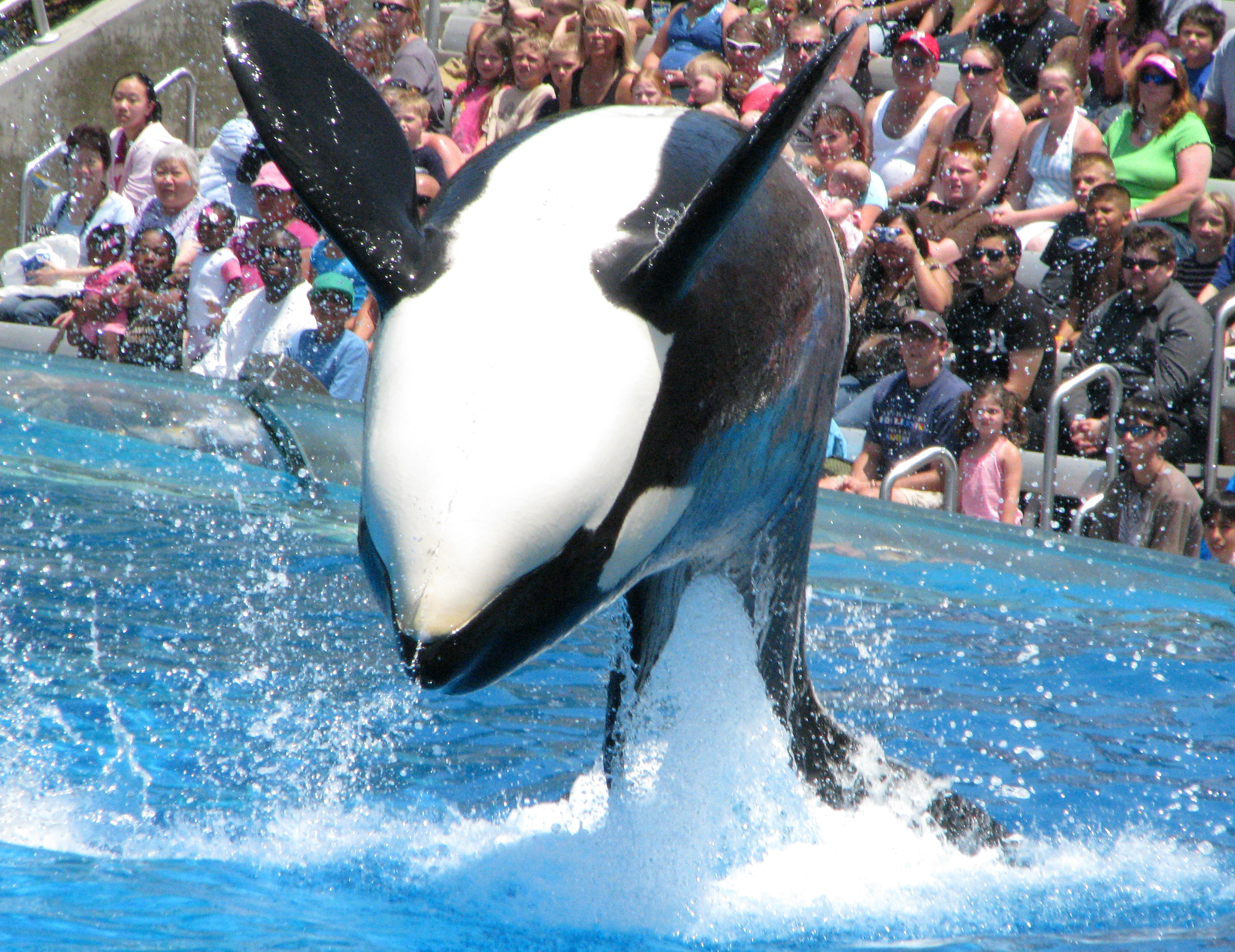
How do you train a Killer Whale? What happens minutes before the show starts? Discover the secrets about this dream going behind the scenes of the most amazing Shamu show up to date: Believe!

April 19: Believe - The Complete SHAMU show (Click Here to see)

April 20: The Making of Believe (Click Here to see)

April 21: Behind the Scenes of Believe


Wednesday, April 20, 2011

The Making of Believe - The Shamu show at Sea World

This is our countdown to the all-new Shamu Show, One Ocean.

Yesterday we posted a video with the complete Shamu show: Believe (Click Here to see).
Today is the 'Making of' Video!

April 19: Believe - The Complete SHAMU show

April 20: The Making of Believe

April 21: Behind the Scenes of Believe (Click Here to see)

Tuesday, April 19, 2011

Believe - The Complete SHAMU show

This is my trilogy-tribute to Believe! The show is comming to an end on April 21, 2011 and will be replaced by One Ocean on April 22, 2011!

So... this is our video countdown:
April 19: Believe - The Complete SHAMU show

April 20: The Making of Believe (Click Here to see)

April 21: Behind the Scenes of Believe (Click Here to see)

I hope you all enjoy this trilogy :-D

"Believe blends unique killer whale behaviors with elaborate set pieces, state-of-the-art multimedia, music and choreography taking guests on a journey in which anyone believes they can connect with these magnificent mammals. This inspirational show also accentuates the close relationship Sea World trainers have with the killer whales, and will amaze you!"
- SeaWorld

Click Here to read everything about SHAMU!

Click Here to more info about One Ocean, the all-new SHAMU show!


Tuesday, April 12, 2011

That's All About SHAMU!


Click Here to read: SeaWorld Orlando launches One Ocean on April 22

Shamu is a stage name that Sea World uses for any of the adult (male or female) killer whales in their shows and many stories exist about the origin of Shamu's name. One revolves around the first collected killer whale that was named Namu after a British Columbian town. When Sea World welcomed its first killer whale, it was named Shamu, for "She-Namu".

Namu is accidentally snared in a fisherman's gill net near Namu, British Columbia, Canada. Ted Griffin, the young owner of the Seattle Public Aquarium buys Namu for $8,000 cash. The bull killer whale is the first captive orca to perform for the public. Namu dies in July 1966 - 11 months later - due to an infection from polluted water in his pen.

Captured by Ted Griffin in Puget Sound in 1965, Shamu was intended to be a companion for the orca Namu in Griffin's Seattle aquarium. Shamu was however quickly leased and eventually sold to SeaWorld in San Diego.

As the fourth killer whale  ever captured (the second female), Shamu was the third orca ever displayed in a public exhibit. She was the first orca to survive more than 13 months in captivity and after her death in 1971 (from an unspecified infection), the name Shamu continued to be used in Sea World "Shamu" orca shows for different killer whales in different Sea World parks.


T H E   B A B Y   S H A M U


Kalina (September 26, 1985 – October 4, 2010) was the first captive-born Orca calf to survive more than a few days. Kalina's mother is an Icelandic female named Katina, and her father, Winston (also known as Ramu III) was a Pacific Southern Resident, making Kalina an Atlantic/Pacific hybrid — a unique situation that would not have occurred in the wild. Kalina measures 17 feet 9 inches (5.41 m) and weighs approximately 6,300 pounds (2,900 kg).

Kalina first appeared in shows at SeaWorld Orlando in 1987, billed as "Baby Shamu", performing with her mother. On February 12, 1990, Kalina was transferred to Sea World Ohio. She was moved again in October of that year to Sea World San Diego, and again on May 30, 1991 to Sea World San Antonio. In October 1994, Kalina was moved back to Sea World Orlando, where she lived with eight other killer whales, including her mother and a half sister.


Kalina gave birth to her first calf, a male named Keet, on February 2, 1993 at Sea World Texas. Kalina was only seven and a half years old at the time of Keet's birth — an extremely young age for an Orca to become a mother. Kalina became pregnant again shortly after Keet's birth, and was moved back to SeaWorld Orlando in October 1994, where she gave birth to her second calf, another male, Keto on June 17, 1995. She gave birth to another male, Tuar, on June 22, 1999. Kalina bore her fourth calf and first daughter, on February 9, 2004, named Skyla. Skyla is now at Loro Parque.

Kalina was a gentle whale, learned quickly, and was used a lot in shows. She was used as a "starter whale" for new trainers. She never showed any signs of aggression towards her trainers or other orcas. Prior to Taima's unexpected death on June 6, 2010, Kalina could be seen swimming with her and Malia, Taima's calf and the youngest orca at Orlando. On Monday October 4, 2010, less than four months after Taima's death, Kalina died of Preacute Bacteremia Septicemia at the age of 25.


A L L   T H E   S H A M U   S H O W S

                                 Doctor Dolittle
1971–1974               Shamu Goes Hollywood
1974–1975               Shamu for Mayor
1975–1977               Shamu the Yankee Doodle Whale
1977–1980               Shamu Goes to College
1980–1982               This is Shamu
1982–1984               Shamu, Take a Bow
1984–1986               Shamu Celebration
1987                         Shamu's Water Symphony
1988–1990               Shamu 25th Anniversary
1989–1991               Baby Shamu Celebration
1992–1995               Shamu New Visions (Played from 1998–2004 at SeaWorld San Antonio)
1995–1998               Shamu: World Focus
1998–2006               The Shamu Adventure
2005–2006               The Shamu Experience
2006–present            Believe
2011–future              One Ocean (April 22)

N I G H T   S H O W S   ( S P R I N G   AND   S U M M E R)

Shamu Rocks Texas           San Antonio, TX
Shamu Rocks America      Orlando, FL and San Diego, CA
Shamu Rocks                    Orlando, FL


 A   G L I M P S E   A T   K I L L E R   W H A L E S


A healthy adult killer whale is an apex (top) predator in the ocean; it can prey on anything that lives in the sea (even a White Shark – See video Bellow), but has no predators of its own. Some killer whales are even known to prey on other species of whales. At one time, people called them "whale killers," which was eventually modified into killer whales.


Each adult killer whale at Sea World receives 140 to 240 pounds of food per day. Among the types most often fed are herring, capelin, salmon, mackerel, and occasionally others. Fish is always kept refrigerator and well-iced to help maintain the highest husbandry standards.

Each animal is fed at random amounts at random intervals throughout the day. To provide a high level of mental and physical stimulation, it is important to vary feeding times and amounts for mental stimulation.

Five types of training sessions known as PLESR (pronounced pleasure) were defined: play, in which anything goes; learning, when new behaviours are taught; exercise; socialization, in which animals interact with several trainers to simulate a pod; and relationship, when the animal and trainer spend time one-on-one to strengthen their bond.

Bruce Stephens, former director of animal behaviour for Sea World in San Diego and now a consultant to marine parks, says orcas have hurt him dozens of times but he still doesn't hesitate to jump into the water. "Any person who has trained these animals has been thumped, bumped, bruised, bitten and otherwise abused over the course of time," he told Nancy Cleeland of The San Diego Union. "It happens to everyone." He said that "you have to appreciate the potential for danger" but the record has "really been quite good for orcas - especially when you consider that about 40 people a year are killed in accidents with elephants."


O T H E R   F A M O U S   W H A L E S


K A T I N A

 Katina is the one in the Middle

Katina is a female who lives in SeaWorld Orlando. She was captured near Iceland at about two years of age on October 26, 1978. She is healthy and the most successful breeding female Orca in captivity. At 16 feet 4 inches (4.98 m) and about 5,600 pounds (2,500 kg), Katina is small compared to other females, but she is rather bulky.

Upon her capture, Katina was purchased by Marineland (Ontario). In 1979, Katina was bought by SeaWorld and was sent to their park in San Diego. In 1982, Katina was moved to Sea World Ohio in Aurora, Ohio with another female named Kasatka, with whom she was captured in 1978. For two years, the two would perform in the Ohio park during the summer months and then be moved back to San Diego for the winter. Finally, in 1984, Katina was transferred to the SeaWorld in Orlando.

Katina became pregnant in early spring of 1984 at SeaWorld San Diego from a male named Winston. Soon after, she was moved back to Sea World Ohio for the summer. The trainers soon realized she was pregnant, so she was moved to Orlando at the end of the summer season, where she gave birth on September 26, 1985 to a female who was named Kalina. Although ten Orca calves had been born in captivity prior to Kalina, none had survived past a few weeks. Kalina was the first Orca calf to be successfully born and raised in captivity. Kalina was taken from her mother at 4 years 5 months and conducted on a trip around all four SeaWorld parks. 


In early 1987, an adult male named Kanduke arrived in Orlando. He and Katina soon mated. Katina bore her second calf on November 4, 1988, a female named Katerina. In early 1991 at a very early age Katerina was transferred out of Orlando. Katerina died on May 5, 1999 at SeaWorld San Antonio at 10.5 years of age. A male named Tilikum came to SeaWorld in January 1992. It wasn't long before Katina was pregnant again. She gave birth to her first son on September 9, 1993, named Taku. Katina's next calf came on December 27, 1996, a female named Unna. Her fifth calf was a male born on August 25, named Ikaika. Unna, Ikaika, and Taku were all fathered by Tilikum. Katina gave birth to her sixth calf, a female named Nalani, on September 18, 2006. The calf appears to be in good health and is now appearing in shows with Katina.

Katina is an excellent performer and is very reliable, putting on performances daily. Katina is sweet-natured and patient and has never been involved in any incidents with handlers. Being the matriarch of the Orcas, Katina is rather dominant. She can sometimes, although rarely, be stubborn and refuse to perform. When this happens, usually all of the other Orcas follow suit. Katina only lives with two of her seven calves (Nalani and Makaio) and one of her grandchildren (Trua). She is always with her calf, but is also with Nalani and Kayla quite often. She is grouped with her son Makaio, Trua, Malia, Nalani and Kayla.

Katina appeared on a That's My Baby episode, where she gave birth to Ikaika.

Katina gave birth to her seventh calf, Makaio on October 9, 2010 at 7:28 p.m. The great-grandmother went into labor at 6:47 p.m. and delivered a 7-foot (2.1 m)-long, 350-pound male calf. He swam to the surface moments later for his first breath


T I L I K U M 


Tilikum (the largest orca in captivity and the most successful sire in captivity as well) lives in Sea World Orlando and he has long been known as the whale with the biggest splash, prompting many to buy ponchos outside the stadium so that they could sit in the front row and take all that the orca had to offer.

Following a year long hiatus after his third killing, Tilikum returned to performing at SeaWorld Orlando on 30 March 2011.


First incident
While at Sealand, on February 21, 1991, Tilikum was involved in an incident which resulted in the death of a female trainer. The trainer slipped and fell into the tank with the whales. Tilikum, pregnant Haida II, and Nootka IV grabbed her in their mouths and tossed her to each other, presumably playing. The trainer subsequently drowned. The orcas had never had humans in the water with them before. Both females were pregnant at the time which was not known to the trainers.

Second incident
Tilikum was at the scene of a death on July 6, 1999. Daniel P. Dukes (Danny Dukes), a 27-year-old who grew up in Austin, TX, was found floating naked in Tilikum’s pool. Dukes had visited SeaWorld the previous day, stayed after the park closed, and evaded security to enter the orca tank. Investigators determined that Dukes supposedly bit Tilikum, and Hypothermia was listed as Duke's main cause of death. Dukes had been living in South Carolina and Texas prior to the incident.

Third incident
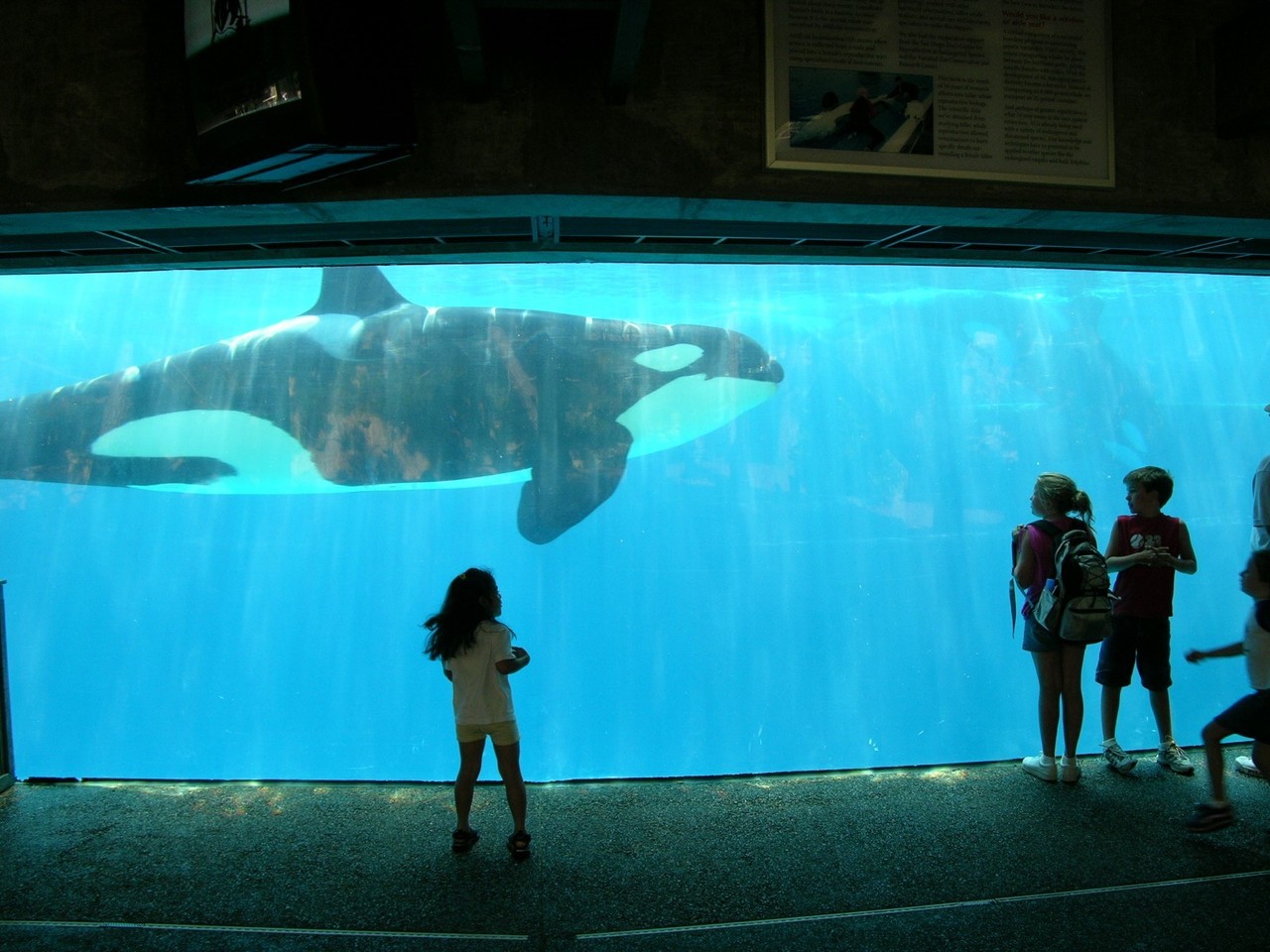
On February 24, 2010 Tilikum was involved in a third incident, when he killed Dawn Brancheau, a 40-year-old trainer with 16 years of experience at SeaWorld. The trainer was drowned following a popular 'Dine with Shamu' show as at least two dozen tourists looked on from above a whale tank and from an underwater viewing area. Employees used nets and threw food at the whale in an attempt to distract him.

Moving from pool to pool in the complex, they eventually captured Tilikum and released Brancheau's body, before realizing that the whale still had her arm. A SeaWorld executive confirmed what witnesses saw, that Tilikum pulled the trainer into the water by her ponytail, possibly mistaking it for a fish or thinking it was a toy. Brancheau's autopsy indicated death by drowning and blunt force trauma. The autopsy noted that her spinal cord was severed and she sustained fractures to her jawbone, ribs and to a cervical vertebra.

On August 23, 2010, the park was fined US$75,000 by the Occupational Safety and Health Administration (OSHA) for three safety violations, two directly related to Brancheau's death. SeaWorld issued a statement that called OSHA's findings "unfounded".

Scott Brancheau, widowed husband of the SeaWorld Orlando trainer Dawn Brancheau, has hired Chicago law firm O'Connor & Nakos that specializes in wrongful-death litigation to represent him.

Tilikum returned to performing on March 30, 2011. The trainers no longer work closely with him, and no trainers are allowed in the water with him. High pressure hoses are used to direct the whales, and guardrails and safety nets have also been installed in the pool. There are plans to install false-bottom floors that can lift trainers and whales out of the pools in under a minute.


Click Here to see a list of List of captive orcas

Click Here to read Stories of Captive Killer Whales
Click Here to Learn More about Killer Whales

Click Here to read the AMAZING article "The First Captive Killer Whales - A Changing Attitude"

Click Here to know everything about Believe - The Shamu Show


Friday, April 8, 2011

SeaWorld Orlando launches One Ocean on April 22

Update: April 12, 2011 - Beneath the Surface:‬‪The Making of SeaWorld's New Killer Whale Show "One Ocean"‬‪


SeaWorld parks across the U.S. will soon debut an all-new Shamu show this spring and summer, connecting you and your family to the sea with a new level of energy, excitement and vibrancy as it educates and inspires you to make a difference in this world.


“One Ocean” features SeaWorld’s majestic killer whales as ambassadors of the sea, and the ocean as the center of our natural world. The show connects you with these remarkable animals and immerses the you in the vivid colors and sensations of the underwater world. At the core of the show is the unifying message that both animals and humans are part of one world, with one ocean, and its future is in our hands to cherish and protect.


This new show is what you love about our parks – thrilling entertainment that educates and inspires you to celebrate, connect and care for the world we share.

One Ocean features spectacular whale behaviors, including thrilling high-energy leaps and multiple whales performing simultaneously.  The whales interact in new ways with trainers, the audience, each other, and even the set itself.  In one segment, the whales play amid giant fountains.

Shamu Stadium – with its three-story set, panoramic LED screens and hundreds of surround-sound speakers – will feature special effects that envelop you in the show experience, including brilliantly colored lights; soaring fountains; stunning underwater imagery and an original, contemporary musical score with global rhythms.


But even more important is the educational message the show imparts: we are all part of one world and have the power to make a difference.  The message of caring and respect for the world we share is woven throughout the show – encouraging guests to make a difference through their own everyday actions.

Find out more at SeaWorldOrlando.com/OneOcean.

Coming Soon to this blog: An All Special Tribute to 'Believe': Exclusive videos in the Backstage and the complete show!